IPRA hosts event featuring Africa’s climate change challenges and the role of communication
27 minutes ago
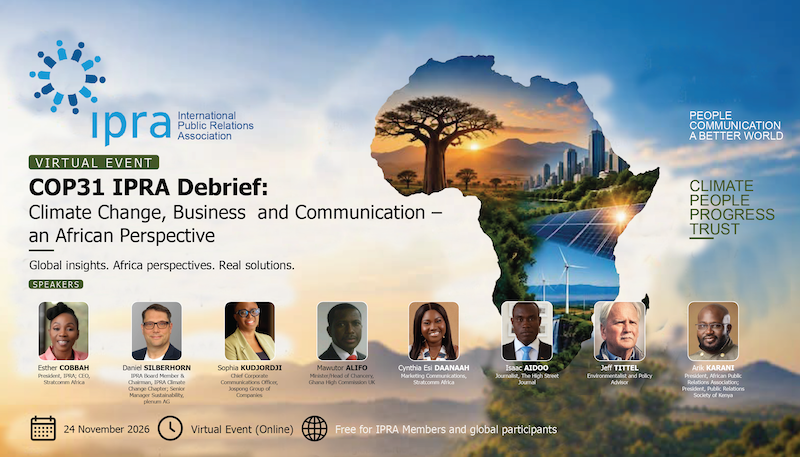
The International Public Relations Association (IPRA) recently hosted a two-hour webinar examining the outcomes of COP31 and the intersections of climate change, commerce, and strategic communication from an African viewpoint. Hosted by IPRA board member and Climate Change Chapter chair Daniel Silberhorn and opened by IPRA President Esther Cobbah, the session featured a keynote address and two panels exploring the realities of African business and effective climate communication in practice.
Setting the global context, US environmentalist Jeff Tittel noted that COP31 delivered less political consensus than anticipated as fossil-fuel-producing nations actively blocked progress. Turning to African business realities, Sophia Kudjordji of Chopon Group explained that climate change has moved out of corporate social responsibility reports and directly into boardrooms, supply chains, and financial strategy. From a diplomatic and investment standpoint, Mawutor N.K. Alifo of the Ghana High Commission highlighted that while Africa contributed roughly four percent of historical emissions, the continent bears a disproportionate climate burden. With COP31 pledges failing to translate into concrete financial commitments, Alifo argued that African nations must look inward through internal resource mobilization, youth education, and technology transfer.
Delivering the Pan-African communication keynote, African Public Relations Association (APRA) President Arik Karani opened with the Kiswahili proverb Haba na haba, hujaza kibaba, meaning little drops fill the container. Karani emphasized that climate change is an immediate, lived reality across rural Africa, where failed rains and flooding directly threaten harvests and food security. To inspire action and shift mindsets, communicators must translate climate science out of technical jargon and connect it to health, agriculture, and culture using community radio, local languages, documentaries, and social media.
Cynthia Esi Daanaah of Stratcom Africa demonstrated how these principles work on the ground, sharing lessons from two campaigns that earned IPRA Golden World Awards. Daanaah stressed that effective communicators must avoid one-size-fits-all messaging, map stakeholders carefully, use human interest stories over raw statistics, and build trust through local opinion leaders and participatory platforms like the Ghana Gardening Flash Show.
Bringing these themes together, Daniel Silberhorn echoed David Attenborough’s observation that saving the planet is now a communications challenge. Silberhorn pointed members to the IPRA Climate Change Communications Guidelines on the IPRA website, which align with IPCC science and UN Sustainable Development Goal 13. In the closing discussion, speakers called for reframing Africa’s global narrative from a vulnerable continent seeking aid to a bankable climate investment hub rich in solar, wind, and climate-smart agricultural opportunities.
To learn more about IPRA’s climate change chapter, guidelines and initiatives, please visit ipra.org.
Matthew Cossel contributed to this report.
Share on Twitter Share on Facebook