
Global PR scholars call for stronger role in AI governance at IPRA Roundtable
1 day, 3 hours ago
International experts at EUPRERA Congress examine trust, influence and accountability in the AI era, contributing to IPRA Gold Paper No. 20.
As artificial intelligence reshapes communication, trust and influence, public relations must move beyond managing messages to helping shape responsible AI governance. This was a key takeaway from an international roundtable convened by the International Public Relations Association (IPRA) at the recent EUPRERA Annual Congress in Málaga, Spain.
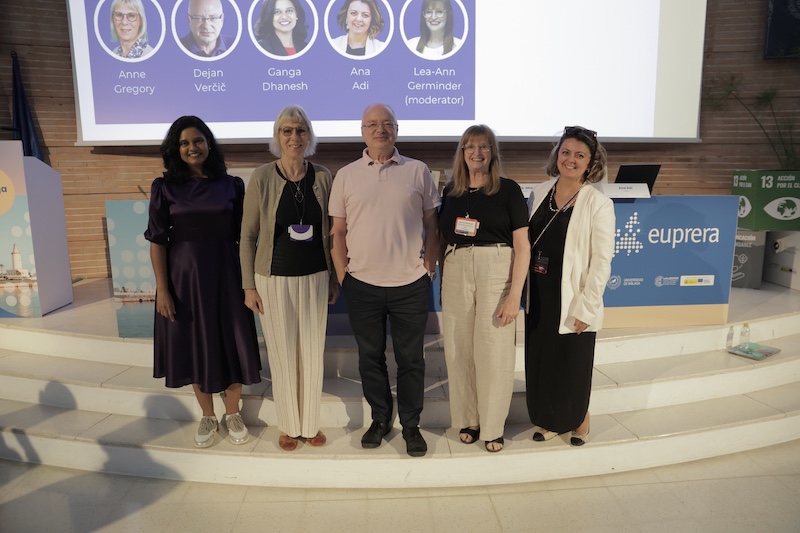
Organized by the IPRA AI Chapter in collaboration with the European Public Relations Education and Research Association (EUPRERA), the roundtable, “The Strategic Repositioning of PR in AI Governance,” brought together four leading scholars: Anne Gregory, Professor at the University of Huddersfield (UK); Dejan Verčič, Professor at the University of Ljubljana (Slovenia); Ganga Dhanesh, Associate Professor at the University of Maryland (US); and Ana Adi, Professor at Quadriga University of Applied Sciences (Germany). The discussion was moderated by Lea-Ann Germinder, PhD, APR, Fellow PRSA, U.S. Representative of the IPRA AI Chapter.
“AI is changing how we communicate, earn trust, exercise influence and establish accountability. Public relations cannot remain on the sidelines of AI governance. Our profession has a vital role in ensuring technology serves people, strengthens informed public dialogue and supports responsible decisions,” said Svetlana Stavreva, IPRA’s AI Chapter Chair. “We are grateful to our distinguished panelists for their insights and to EUPRERA for hosting this important discussion. Their perspectives will make a valuable contribution to IPRA Gold Paper No. 20.”
Rethinking Trust, Influence and Accountability
While offering different perspectives on AI's impact, the scholars agreed that public relations must reassess its responsibilities in an increasingly automated information environment.
Dejan Verčič highlighted the unprecedented speed of AI-driven communication and the need to counter misinformation in real time. “The basic question is not who sees you, but who takes you seriously,” he said, emphasizing credibility over visibility.
Anne Gregory warned that attention and clickability increasingly overshadow truth and reliability. Viewing AI as an actor rather than merely a tool, she urged the profession to redefine the human role in communication and invest in people alongside technology.
Ganga Dhanesh called for greater responsibility beyond organizational interests, emphasizing society's need for critical thinking and healthy skepticism. “Transparency is not synonymous with trust,” she cautioned, highlighting the risks of AI-driven manipulation.
Ana Adi urged the profession to strengthen ethical accountability and extend its communication expertise beyond PR. “We should maybe, looking forward, not worry so much about teaching AI to comms people, but rather ensuring that we teach comms to everybody else,” she said.
Across their differing views, common priorities emerged: stronger public engagement, greater AI and media literacy, proactive responses to misinformation, and clear human accountability for AI-related decisions.
"The purpose of the roundtable was to gather diverse international perspectives rather than reach consensus, and the panel delivered exactly that," said Lea-Ann Germinder. "Four scholars from four countries disagreed on whether AI changes anything fundamental and on whether organizations should move faster or slow down, yet each arrived at the same conclusion: public relations must look outward toward society, invest in the capacity of people to judge what they see, and take responsibility for the AI decisions organizations make. That range of informed opinion is what the Gold Paper working group needs."
The Málaga discussion forms part of a series of international roundtables contributing to the Gold Paper, bringing together perspectives from different countries and sectors. Rather than seeking consensus, the initiative aims to identify key challenges, emerging approaches and practical recommendations for communication leaders worldwide. The roundtable recording and edited transcript have been shared with the IPRA AI Chapter and the Gold Paper's lead author.
Background to IPRA
The International Public Relations Association, established in 1955, is the leading global network for public relations professionals in pursuit of excellence in the profession. IPRA publishes Gold Papers on major issues facing the profession and administers the Golden World Awards. www.ipra.org
The discussion will inform IPRA Gold Paper No. 20, “Trust and Influence in the Age of AI,” which examines the evolving responsibilities of public relations in AI governance and is scheduled for publication later.
Background to EUPRERA
The European Public Relations Education and Research Association is an autonomous organization dedicated to stimulating and promoting knowledge and practice of strategic communication in Europe. Its 2026 Annual Congress was held in Málaga, Spain, 16 to 19 September, on the theme "Regenerating public relations and strategic communication in the face of the new global order."
Contact
International Public Relations Association Secretariat
United Kingdom
Telephone +44 1634 818308
Share on Twitter Share on Facebook